
What is Pneumococcal Disease and what illnesses can it cause?
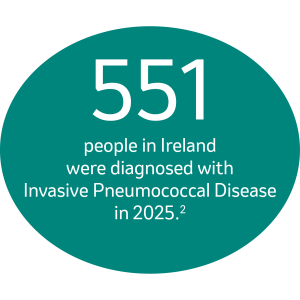
Pneumococcal disease is a major cause of illness and death in Ireland, particularly among the very young, the elderly and those with a weakened immune system.5
Pneumococcal disease is caused by a common bacterium, Streptococcus pneumoniae, which can attack different parts of the body. It can cause illnesses that range from mild to very severe.1 When pneumococcal bacteria spreads from the nose and throat to ears or sinuses, it generally causes mild infections. When it spreads into other parts of the body, it can lead to severe health problems like pneumonia and meningitis.1
Watch Dr. Sumi Dunne discuss Pneumococcal disease and vaccination
Pneumococcal Immunisation Programme
Pneumococcal vaccines which can help protect certain populations against Pneumococcal Disease are available through the National PPV23 Immunisation Programme.1
Adult Pneumococcal Vaccination
The PPV23 vaccine is free of charge for those for whom it is officially recommended, such as people over the age of 65 and those in identified at-risk groups.1
Pneumococcal vaccination is usually a single vaccination for those at-risk, but re-vaccination may be required for some people in certain at-risk groups.5
The PPV23 vaccine can be given with the annual flu or COVID-19 vaccines.4
Those in the following groups should be vaccinated with Pneumococcal Polysaccharide Vaccine PPV23.4
- Everybody aged 65 years and over
-
Those aged over 2 years with:
- Diabetes
- Chronic heart disease
- Chronic lung disease
- Chronic liver or kidney disease
- Chronic neurological disease
- Children aged over 2 years and under 5 years of age with a history of invasive pneumococcal disease
- Coeliac disease
- Down Syndrome
- Immune deficiency because of a disease or treatment, including cancer patients
- HIV infection
- Cochlear implants or are about to get cochlear implants
- Absent spleen or a non-functioning spleen
- Cerebrospinal fluid leaks
- Intracranial shunt
Your recommendation matters
Pneumococcal infection is a leading cause of mortality worldwide.5 However, awareness is low, with many at risk adults remaining unvaccinated. In Ireland, 71% are not aware of the national vaccination programme for pneumococcal disease.6 Healthcare professionals are the most trusted advisor and influencer of vaccine decisions. Your recommendation is the most important factor in a person’s decision to receive or consent to vaccination.3
Certain groups are at increased risk of invasive pneumococcal disease than the general population and both PCV and PPV23 are recommended. Vaccine types and schedule for these at-risk groups detailed in the following table5:
Table 16.2 Pneumococcal immunisation for those at increased risk of IPD
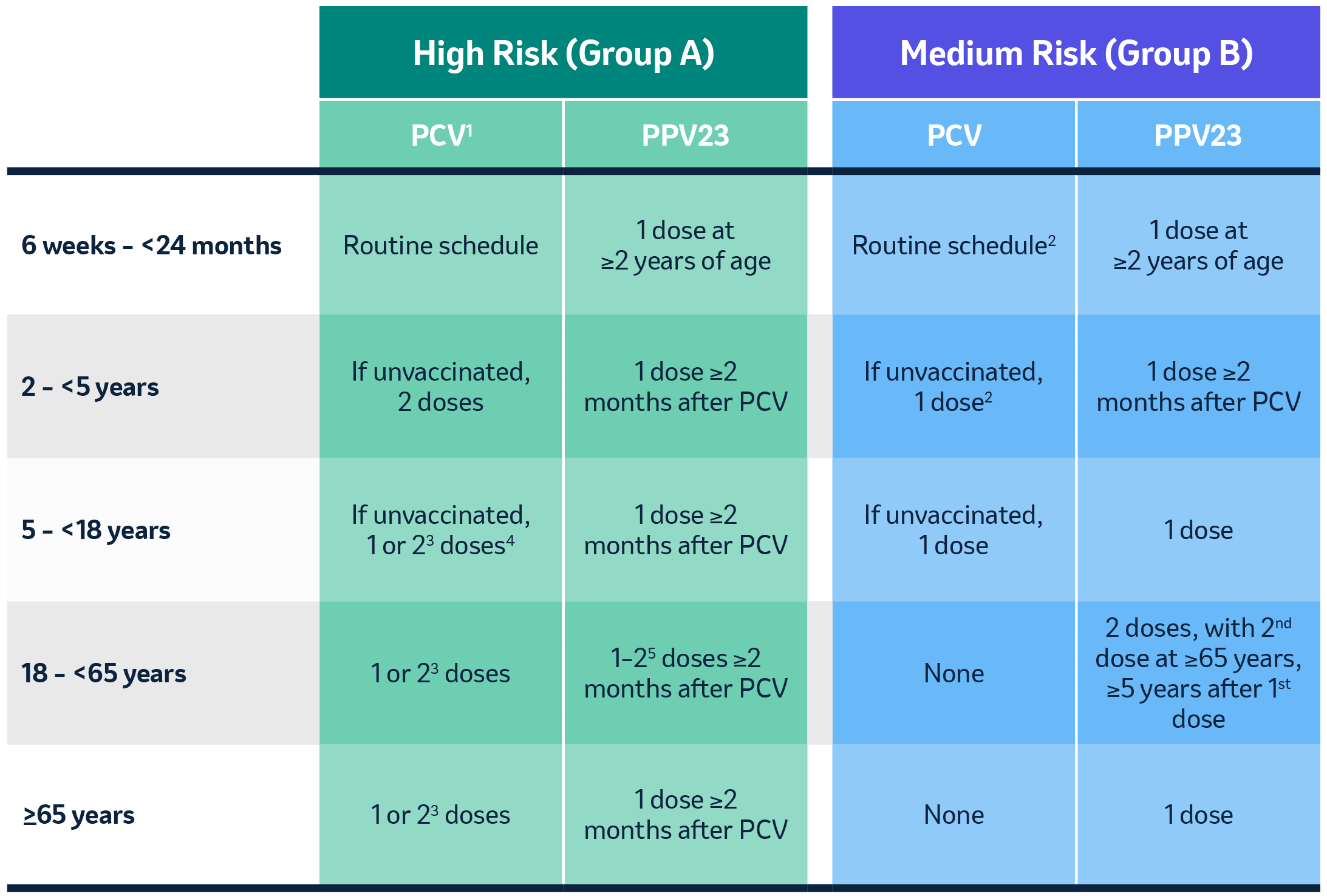
- HSCT recipients require 3 doses at 6, 8 and 12 months post-transplant
- 1 additional dose if had IPD, irrespective of vaccine history
- 2 doses 2 months apart if response may be blunted e.g. asplenia/ hyposplenia (see Chapter 3 – NIAC guidelines)
- If fully vaccinated with PCV7 give 1 dose of PCV13
- 2 doses 5 years apart if response may be blunted e.g. asplenia/ hyposplenia (see Chapter 3 – NIAC guidelines)
Paediatric Pneumococcal Vaccination
PCV 13 (Pneumococcal Conjugate Vaccine) has been in the Irish childhood immunisation programme since December 2010.5
PCV 13 contains Polysaccharide from 13 of the most common capsular types (1, 3, 4, 5, 6A, 6B, 7F, 9V, 14, 18C, 19A, 19F and 23F.5
Children should not get PCV13 if they have had a serious (life-threatening) allergic reaction to a previous dose or any of its constituents.5
To support your consultations and patient education on pneumococcal disease please visit pneumoaware.ie for comprehensive, easy-to-understand information designed for patients.

- HSE – Adult Pneumococcal Information Leaflet (PPV23) (Accessed April 2026)
- HPSC – National Notifiable Disease Hub. (Accessed April 2026)
- Paterson P, Meurice F, Stanberry LR, et al. Vaccine hesitancy and healthcare providers. Vaccine. 2016;34:6700-6706. (Accessed April 2026)
- HSE. Pneumococcal vaccine for people at risk. (Accessed April 2026)
- NIAC. Chapter 16 Pneumococcal Infection. (Accessed April 2026)
- B&A Research 2025 (MSD Data on File 2025)
IE-PNX-00096 | Date of preparation: May 2026